Every experienced biomass importer has a story about a shipment that sat at customs for weeks, or worse, got turned away entirely, because a single certificate was missing, expired, or issued by an unaccredited body. Indonesia is one of the world’s most important biomass export origins, but its documentation landscape spans timber legality law, agricultural quarantine regulation, and voluntary sustainability certification, three separate systems that buyers often don’t realize they need to check independently. This checklist walks through exactly what to request, why each document matters, and what happens if you skip it.
Why Documentation Matters More With Indonesian Biomass Than Many Buyers Expect
Indonesian biomass exports sit at the intersection of several regulatory frameworks simultaneously. Wood-based products fall under Indonesia’s mandatory timber legality system. Agricultural residues like rice husks, palm kernel shells, and coconut byproducts fall under plant quarantine and phytosanitary law. And an increasing number of destination markets, particularly the European Union, layer their own sustainability due diligence requirements on top of whatever Indonesia issues domestically. A supplier who can only produce a commercial invoice and a bill of lading is not equipped to clear customs reliably in 2026’s regulatory environment, regardless of how competitive their pricing looks.
The Core Legal Document: SVLK and V-Legal Certification
What SVLK Actually Verifies
SVLK, Indonesia’s Sistem Verifikasi Legalitas Kayu or Timber Legality Assurance System, is a mandatory national certification confirming that wood-origin products were legally harvested and processed. According to SCS Global Services, a leading accredited third-party certifier, SVLK verification is required by Indonesian law for wood product exporters and helps buyers dramatically reduce their risk of inadvertent violations of major international timber regulations, including the EU Timber Regulation, the US Lacey Act, Australia’s Illegal Logging Prohibition Act, and Japan’s Goho Wood law.
Why You Need the V-Legal Document Specifically, Not Just an SVLK Certificate
Holding SVLK certification and holding a V-Legal export document are related but distinct things, and buyers frequently confuse the two. SVLK certification is the underlying legality verification a producer holds; the V-Legal document is the specific export license issued for each shipment, confirming that particular consignment has passed the legality verification process. Exports of designated timber-origin products without a valid V-Legal document are prohibited under Indonesian regulation. When you request documentation from a supplier, ask specifically for the V-Legal document tied to your shipment, not just a general SVLK certificate that may be months or years old and doesn’t confirm anything about the specific batch you’re purchasing.
Which Products This Applies To
SVLK and V-Legal requirements apply to wood-origin biomass products, including wood pellets, wood chips, wood logs, wood shavings, and bamboo products. Products derived from agricultural residue rather than timber, such as rice husks, palm kernel shells, coconut shell charcoal, and empty fruit bunches, generally fall outside SVLK’s scope but are governed by the phytosanitary requirements covered below instead.
The Agricultural Document: Phytosanitary Certificates
What a Phytosanitary Certificate Confirms
For biomass products of agricultural or plant origin, rice husks, coconut husks, nut shells, palm empty fruit bunches, and similar materials, the relevant document isn’t SVLK, it’s the phytosanitary certificate issued by Indonesia’s National Quarantine Agency, Badan Karantina Indonesia. Under the International Plant Protection Convention framework maintained by the Food and Agriculture Organization of the United Nations, phytosanitary certificates must be issued by technically qualified officers authorized by the national plant protection organization, and they confirm that a plant-origin consignment has been inspected and meets the destination country’s health and pest-risk requirements.
Export vs. Re-Export Certificates
Indonesian regulation distinguishes between two phytosanitary certificate types: one issued for plants and plant products exported directly from Indonesia, and a separate re-export certificate for consignments that originated elsewhere, transited through Indonesia, or underwent processing such as storage, division, or repackaging within the country. If your supplier is exporting material they sourced and processed entirely within Indonesia, which is the standard model for most biomass exporters, you should be receiving the standard export certificate rather than a re-export version, and it’s worth confirming which one you’re getting.
What Happens Without One
A missing or invalid phytosanitary certificate is one of the most common reasons agricultural-origin cargo gets held or rejected at destination customs. Because the certificate confirms the shipment has been inspected and is free of regulated quarantine pests, its absence signals to customs and quarantine authorities in the destination country that the required pest-risk verification never happened, which typically triggers mandatory inspection delays at minimum, and outright rejection in stricter jurisdictions.
Product Quality Documentation: Laboratory Analysis and Certificates of Analysis
Beyond legality and phytosanitary compliance, buyers need documented proof that the material actually meets the specification they’re paying for. A Certificate of Analysis, sometimes issued as a laboratory test report, should confirm the specific parameters relevant to your product and application: moisture content, ash content, and calorific value for combustion fuels like wood pellets, PKS, and biomass briquettes; fiber quality and moisture for coconut husk and coir substrate products; and particle size distribution for any screened material like nut shells or wood chips. Request this documentation for the specific batch you’re purchasing, not a generic product specification sheet, since biomass quality can vary meaningfully between production runs even from the same facility.
Sustainability and Quality Management Certifications
FSC Chain of Custody
Forest Stewardship Council Chain of Custody certification is a voluntary system that tracks wood-origin material through the supply chain, confirming it originates from responsibly managed sources. While not legally mandatory in the way SVLK is, FSC certification has become an increasingly common requirement for buyers supplying markets with strong corporate sustainability commitments or public procurement standards that specify certified wood-origin biomass.
ISO 9001:2015 Quality Management Certification
ISO 9001:2015 certifies that a supplier’s quality management systems meet an internationally recognized standard, covering everything from production consistency to documentation control. This isn’t product-specific documentation so much as an indicator of whether a supplier has the organizational systems in place to consistently deliver what they promise, batch after batch.
Carbon Footprint Certification
As more buyers, particularly in Europe, face their own carbon accounting and reporting obligations, Carbon Footprint Certified status from a supplier provides documented data supporting the buyer’s own sustainability reporting and, in some cases, regulatory compliance around imported biomass emissions accounting.
Trade and Logistics Documentation
Certificate of Origin
A Certificate of Origin confirms the country where the goods were produced, which matters for customs classification and, in some trade relationships, preferential tariff treatment. This is a standard trade document rather than a biomass-specific requirement, but buyers should confirm it’s included with every shipment regardless.
Bill of Lading and Packing List
These logistics fundamentals confirm what’s actually being shipped, in what quantity, and under what shipping terms. While every supplier should provide these as a matter of course, buyers should cross-check the packing list against their purchase order specifications before the shipment departs, not after it arrives.
Fumigation Certificate for Wood Packaging
If your shipment uses wooden pallets, crates, or dunnage, confirm the packaging materials themselves have been treated and certified under ISPM 15 international standards, separate from the phytosanitary status of the biomass cargo itself. Untreated wood packaging material is a common and entirely avoidable reason for customs held in many destination countries.
A Quick-Reference Checklist by Product Category
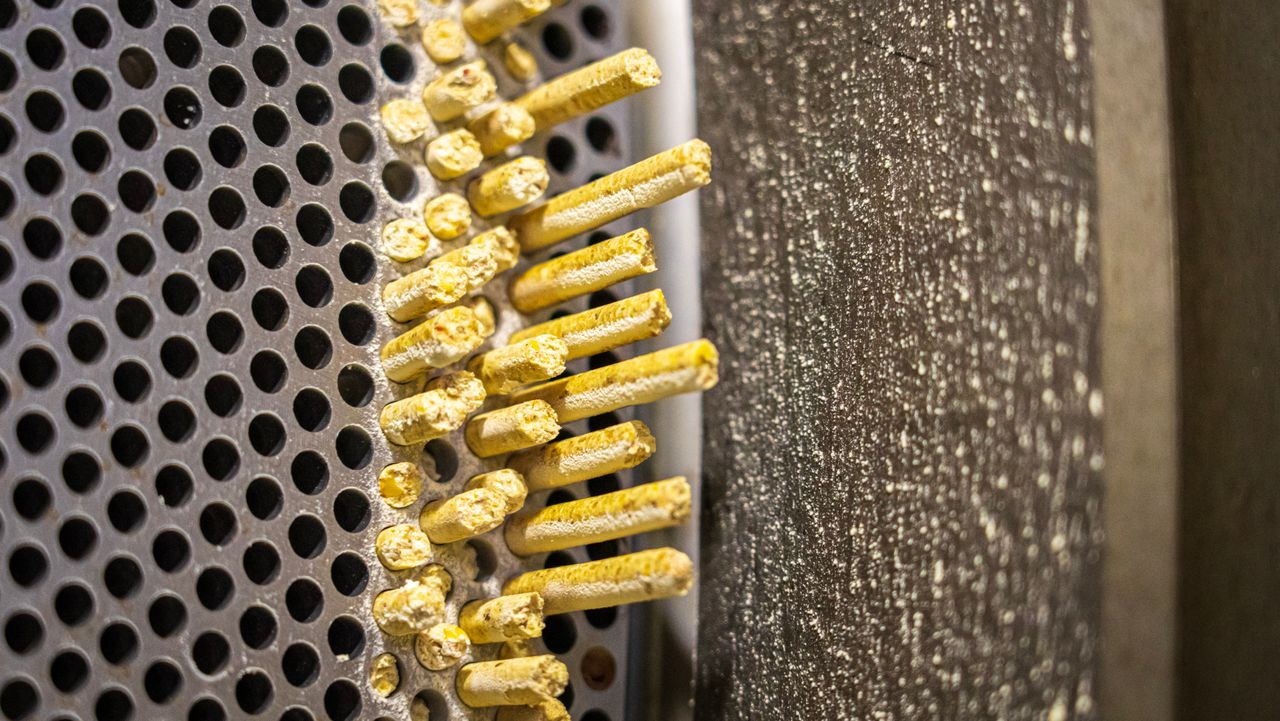
- Wood pellets, wood chips, wood logs, wood shavings, bamboo products: SVLK certificate, V-Legal document, laboratory analysis (moisture, ash, calorific value), FSC Chain of Custody if required by your market.
- Rice husks, coconut husks, nut shells, palm empty fruit bunches, palm kernel shells: Phytosanitary certificate (export type), laboratory analysis specific to your application, Certificate of Origin.
- Coconut shell charcoal and carbon powder: Phytosanitary or processed-product certification as applicable, laboratory analysis confirming ash content and calorific value, Halal certification if relevant to your market.
- All shipments regardless of product: Certificate of Origin, Bill of Lading, packing list, and ISPM 15 fumigation certification if wood packaging is used.
Sourcing Fully Documented Biomass from Indonesia
Tropic World Paradise supplies certified biomass products, including wood pellets, palm kernel shells, coconut shell charcoal, rice husks, and biomass briquettes, from a vertically integrated supply chain spanning processing operations across Sumatra and Kalimantan. Every shipment ships with the documentation appropriate to its product category, including SVLK and V-Legal certification for wood-origin products, phytosanitary certification for agricultural-origin material, ISO 9001:2015 quality certification, FSC Chain of Custody documentation, Carbon Footprint Certified status, and laboratory analysis confirming moisture content, ash content, and calorific value for every batch, giving procurement teams a complete documentation package rather than a partial one assembled after the fact.
Frequently Asked Questions
- Is SVLK certification required for all biomass products exported from Indonesia? No. SVLK and V-Legal documentation apply specifically to wood-origin products, such as wood pellets, wood chips, and wood logs. Agricultural-origin biomass like rice husks and palm kernel shells is governed by phytosanitary certification instead.
- What’s the difference between an SVLK certificate and a V-Legal document? SVLK certification is the underlying legality verification a producer holds, while the V-Legal document is the specific export license issued for an individual shipment, confirming that particular consignment has passed legality verification. You should request the V-Legal document tied to your specific shipment.
- Do I need a phytosanitary certificate if I’m importing processed biomass like carbon powder? It depends on the level of processing. Some processed plant products are certified as unable to harbor pests and may not require a standard phytosanitary certificate, but this should be confirmed with your supplier and the Indonesian Quarantine Authority rather than assumed.
- What happens if my shipment arrives without a valid phytosanitary certificate? Missing or invalid phytosanitary certification commonly triggers mandatory inspection delays at the destination port, and in stricter jurisdictions can result in the shipment being rejected or returned entirely.
- Are FSC and Carbon Footprint certifications legally required, or just recommended? Both are voluntary certifications rather than legal requirements under Indonesian export law, but they’re increasingly expected by buyers in markets with strong corporate sustainability commitments or their own regulatory carbon accounting obligations.
Ready to Source Fully Documented Biomass From Indonesia?
Whether you’re importing wood-origin fuel products or agricultural residue material, Tropic World Paradise can provide the complete documentation package your procurement and compliance teams need for smooth customs clearance. Request an instant quote or browse our full biomass product catalog to get started.