Rice straw buyers often focus on price per ton and overlook a factor that affects nearly every part of the transaction: whether the straw arrives loose or baled. The two forms are not interchangeable. They differ in density, moisture stability, handling cost, and how much usable material actually reaches the buyer’s facility relative to what was paid for.
This guide compares rice straw bales and loose rice straw across the specifications that matter most for bulk buyers, so procurement decisions are based on landed cost and usability, not just the headline price per ton.
What “Loose” and “Baled” Actually Mean
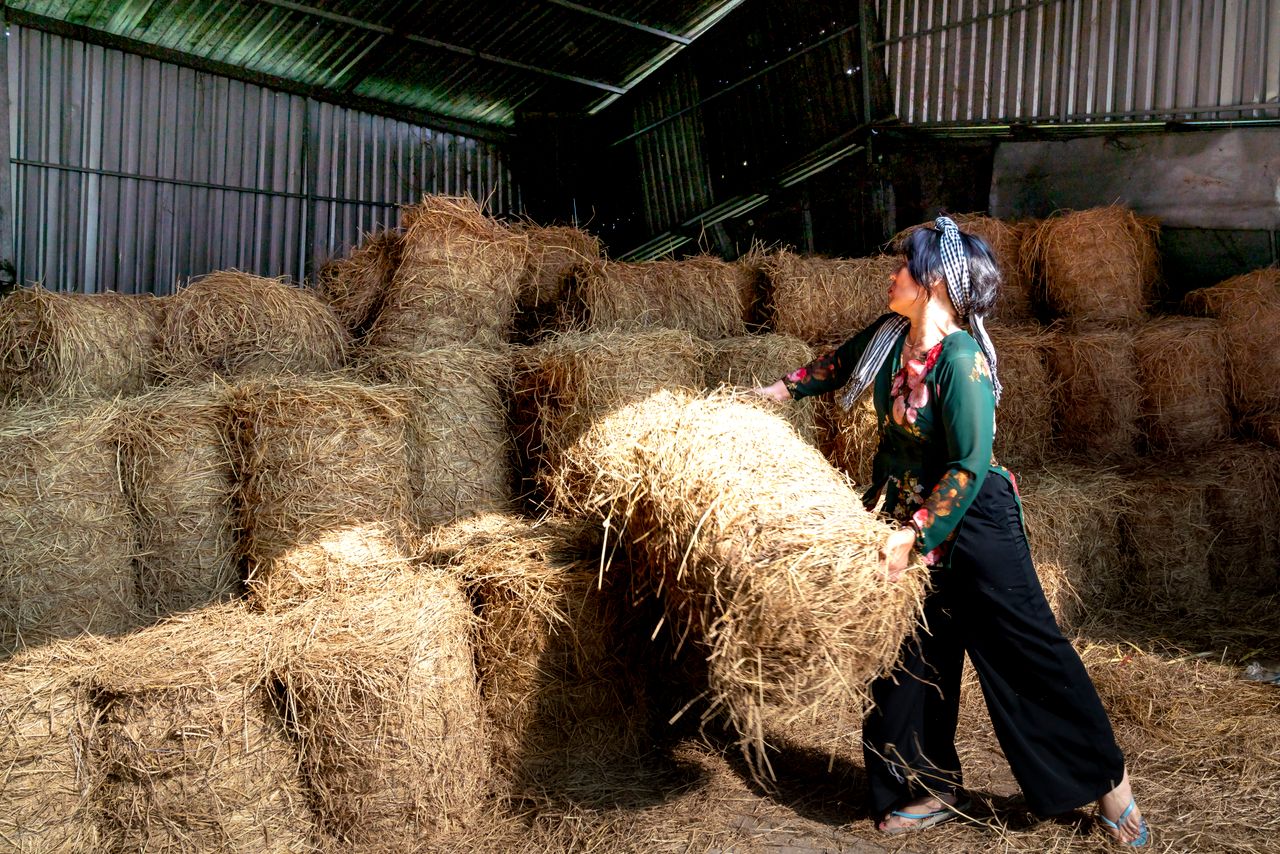
Loose rice straw is collected directly from the field in its raw, uncompressed state, retaining its natural stalk structure. Baled rice straw has been mechanically compressed and bound, typically with twine or wire, into rectangular or round bales for easier handling, storage, and transport across longer distances.
Bulk Density and Shipping Efficiency
Loose Rice Straw Density
According to research published in Springer Nature’s overview of rice straw properties, loose rice straw collected directly from the field ranges from roughly 13 to 18 kilograms per cubic meter in dry matter, an extremely low density that means a huge volume of material for a relatively small weight.
Baled Rice Straw Density
The same research found that baled straw is 50 to 100 percent denser than loose-form straw, with round bales commonly ranging from 60 to 90 kilograms per cubic meter, and mechanically compacted bales reaching considerably higher densities depending on the baling equipment used.
What This Means for Freight Costs
Because ocean and truck freight is often priced by container volume rather than weight alone, loose straw’s low density can make it disproportionately expensive to ship relative to the actual tonnage delivered. Baling solves this by concentrating more usable material into the same shipping volume, which is why nearly all buyers sourcing rice straw for export or long-distance delivery request baled form rather than loose.
Moisture Content and Storage Considerations
Optimal Moisture for Baling
Moisture management differs significantly between the two forms. Straw intended for baling generally needs a moisture content between 15 and 20 percent at the time of baling; baling straw that is too dry increases material losses during the process, while baling above roughly 20 percent moisture raises the risk of mold and heat damage during storage.
Storage Risks for Each Form
Loose straw is more exposed to weather and moisture fluctuation during storage and transit, since it lacks the compact structure that helps bales shed water and resist compression-related spoilage. Buyers storing straw for extended periods, or shipping across long distances with variable climate exposure, generally see more consistent quality retention with properly baled material.
Handling and Labor Considerations
Loose straw requires more labor and equipment to load, unload, and manage on-site, since it cannot be easily stacked, palletized, or moved with standard material handling equipment. Baled straw, by contrast, can be stacked, moved with forklifts, and stored more efficiently, reducing labor hours and turnaround time at both the shipping and receiving ends.
Price and Value Comparison
Baled rice straw typically commands a meaningfully higher price per ton than loose straw, reflecting the added cost of baling equipment, labor, and twine or wire, but the total landed cost comparison usually favors baled straw once freight, handling, and storage losses are factored in. Buyers evaluating price per ton alone, without adjusting for density and handling costs, often underestimate the true cost difference between the two forms.
Common Mistakes Buyers Make When Comparing the Two Forms
Comparing Price Per Ton Without Adjusting for Density
A lower quoted price per ton for loose straw can look attractive until freight and handling costs are added in. Buyers should always calculate landed cost per usable ton delivered, not just the supplier’s quoted price, before comparing offers across form factors.
Assuming All Bales Are the Same Density
Bale density varies by baler type, compression ratio, and bale size, so two suppliers quoting “baled rice straw” may be offering materially different shipping efficiency. Requesting bale weight and dimensions upfront avoids underestimating container capacity or freight cost.
Overlooking Moisture Verification at the Point of Baling
Moisture readings taken well before shipment do not guarantee the straw was actually baled within the safe range. Buyers should request moisture documentation tied to the baling date itself, not just a general specification sheet, particularly for shipments crossing humid climates or long transit times.
Which Form Should Buyers Choose?
For Export and Long-Distance Delivery
Baled rice straw is almost always the better choice for international or long-distance buyers, since its higher density directly reduces freight cost per usable ton and its more stable moisture profile lowers the risk of spoilage during transit.
For Local or Short-Distance Use
Loose rice straw can still make sense for buyers sourcing locally for immediate use, such as regional composting or mulching operations, where transport distance is short and baling costs would add unnecessary expense without a meaningful handling benefit.
Sourcing Rice Straw from Tropic World Paradise
PT Tropic World Paradise supplies rice straw sourced from Indonesia’s agricultural residues, available in baled form for buyers prioritizing shipping efficiency and consistent moisture control. As part of a wider portfolio of biomass products, the company supports buyers across Asia, Europe, and the Middle East with consistent quality and full traceability from farm to port. For related agricultural residue options, see the company’s guide on rice husks for bedding, biochar, and fuel.
Frequently Asked Questions
Is baled rice straw always better than loose rice straw? For export and long-distance transport, yes, since baling significantly reduces shipping volume and improves moisture stability. For short-distance local use, loose straw can still be a practical, lower-cost option.
What moisture content is ideal for baling rice straw? Straw should generally be baled at 15 to 20 percent moisture; baling too dry increases material losses, while baling too wet raises the risk of mold during storage.
Why is loose rice straw more expensive to ship despite a lower price per ton? Its very low bulk density means a large shipping volume is needed for a given weight, which increases freight costs relative to denser, baled straw.
How much denser is baled rice straw compared to loose straw? Baled rice straw is typically 50 to 100 percent denser than loose straw, depending on the baling method and equipment used.
What should I ask a supplier before ordering rice straw in bulk? Confirm the form (loose or baled), moisture content at time of baling, bale density, and storage conditions prior to shipment to avoid quality or freight cost surprises.
Ready to Source Baled Rice Straw for Bulk Delivery?
Whether you need baled rice straw for export or agricultural use, Tropic World Paradise offers consistent quality and dependable global supply. Request a Quote or Contact Our Team to discuss your requirements today.