Poland biomass buyers have quietly become one of the more significant growth stories in Europe’s palm kernel shell (PKS) import market, driven by a coal-heavy power sector under real regulatory pressure to cut emissions without abandoning existing infrastructure. Unlike Japan and South Korea, whose PKS demand is anchored in dedicated Feed-in Tariff and Renewable Portfolio Standard programs, Poland’s demand story is fundamentally about coal power plant conversion utilities retrofitting existing coal units to co-fire with biomass rather than building entirely new generation capacity. For Indonesian PKS exporters, understanding exactly what’s driving this demand, and what Polish utilities require from a supplier, is essential to capturing a genuine and growing European opportunity.
Poland’s Coal-to-Biomass Transition, By the Numbers
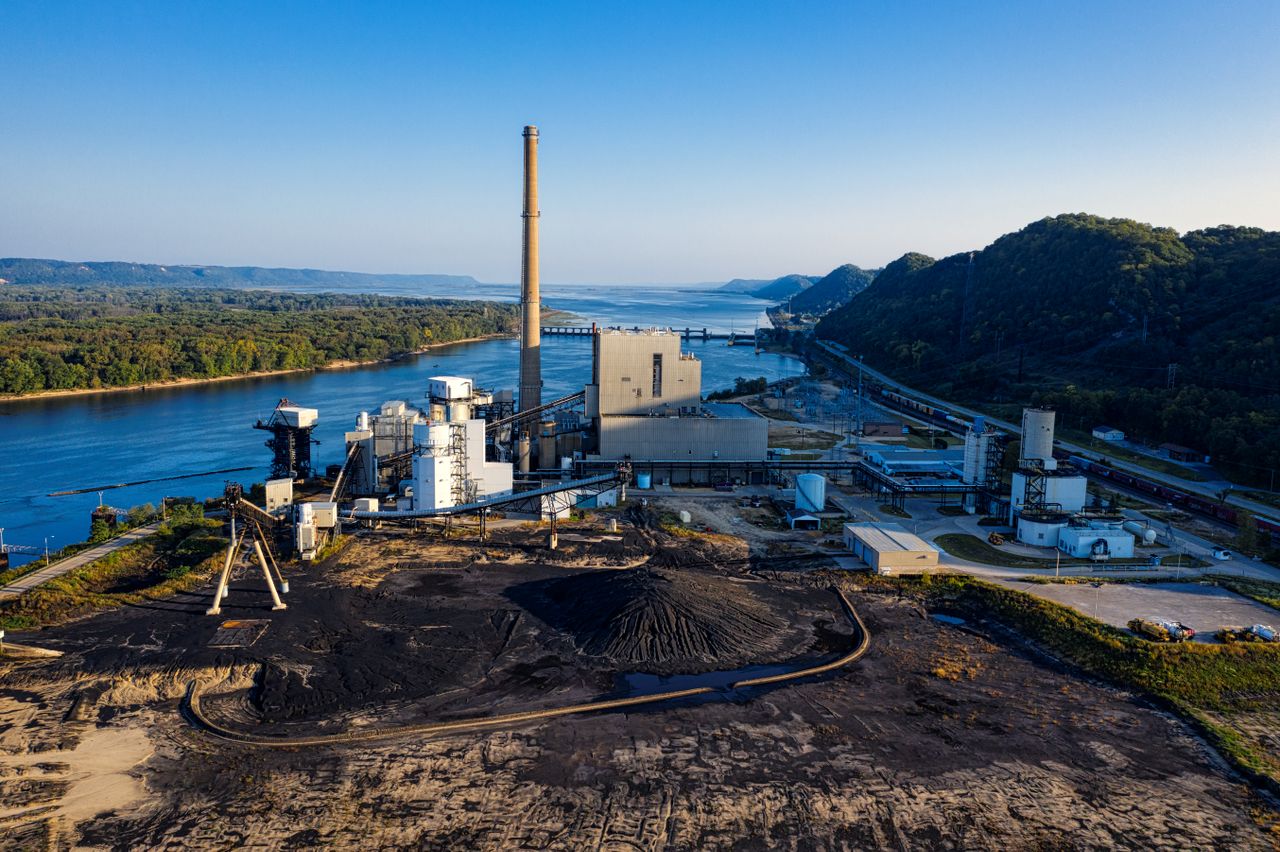
Poland remains one of Europe’s most coal-dependent power markets, which makes its biomass conversion activity particularly consequential for global PKS trade. Reporting from Argus Media confirmed that Poland’s Energa and government-controlled Enea are among the utilities upgrading coal generation units specifically to allow increased wood pellet and PKS co-firing starting in 2026. Enea’s Połaniec power plant which already operates a dedicated 225MW biomass-fired unit alongside its coal capacity is upgrading its coal units specifically to enable co-firing, a change the utility has said could push its total biomass consumption as high as 2.5 million tonnes per year once complete.
The regulatory driver behind this shift is concrete and immediate: Polish coal units face a 550 grams of CO2 per kilowatt-hour emissions cap, a threshold that pushes utilities toward blending in biomass fuel to bring their overall emissions profile into compliance without a full plant replacement. This is a meaningfully different demand driver than Japan’s FIT-subsidized dedicated biomass plants — Polish utilities are retrofitting to stay compliant and keep existing coal assets operational longer, which creates a different but equally durable category of PKS demand.
Why Polish Utilities Are Choosing PKS
Cost and Combustion Compatibility with Existing Coal Infrastructure
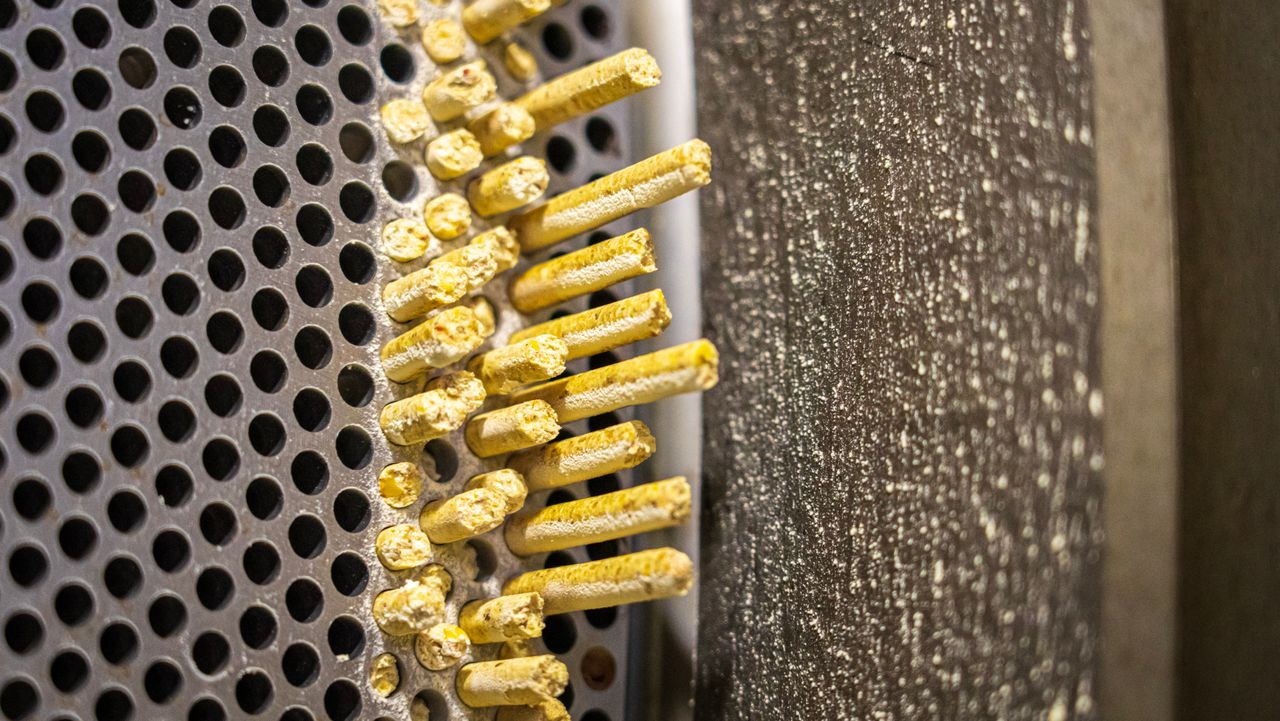
PKS has specific physical properties that make it particularly well suited to retrofit co-firing projects rather than purpose-built biomass plants. Its high calorific value typically in the range of 16 to 20 megajoules per kilogram, comparable to medium-rank coal combined with uniform particle size, low ash content (generally 2–5%), and minimal sulfur content, allows PKS to be blended into existing pulverized fuel and stoker boilers with limited modification to combustion equipment. For a utility like Enea retrofitting an existing coal unit rather than commissioning new dedicated biomass infrastructure, this compatibility significantly lowers the capital cost of the conversion compared to fuel sources that would require more extensive handling system changes.
RED III Compliance and GHG Savings Threshold
Certification and lifecycle emissions accounting have become just as important as physical fuel properties for Polish buyers. Under the EU’s Renewable Energy Directive framework, existing biomass installations must demonstrate at least 70% greenhouse gas savings against the fossil fuel comparator from 2026 onward, a threshold that certified PKS supply chains particularly those with biogas capture implemented at the originating mill are positioned to meet under RED II and RED III lifecycle methodology. This is precisely why certification schemes recognized under EU frameworks, such as ISCC EU, alongside origin-country schemes like Indonesia’s SVLK, have become standard requirements rather than optional extras for exporters targeting the Polish and broader European market.
Gdansk and Gdynia: Poland’s PKS Import Gateway
Poland’s PKS imports flow primarily through the Baltic port cities of Gdansk and Gdynia, which specialist European PKS trading platforms have identified as primary import terminals serving rapidly growing PKS demand driven by co-firing mandates at Polish coal-based utilities. This port infrastructure detail matters for exporters planning shipping logistics and freight arrangements Baltic Sea access via these terminals is the established route for biomass cargo entering the Polish market, distinct from the North Sea and Rotterdam-centered logistics that serve Belgium, the Netherlands, and Germany.
Poland’s position within this broader Northern European biomass corridor also means Polish buyers are increasingly evaluated alongside neighboring demand centers Germany’s district heating operators, Denmark’s Copenhagen and Aarhus-based CHP plants, and Belgium’s Antwerp-based industrial co-firing installations all drawing on overlapping supply chains and certification frameworks, even though each market’s specific regulatory driver differs.
Certification Requirements for Indonesian Suppliers
Given how directly certification determines whether a shipment qualifies for a Polish utility’s co-firing compliance program, Indonesian exporters need to treat documentation as a core part of the product, not an add-on. At minimum, buyers evaluating Indonesian PKS suppliers for the Polish market expect: certification aligned with ISCC EU or an equivalent EU-recognized scheme, documentation supporting the RED III GHG savings calculation (including drying method PKS processed using coal-fired dryers can face less favorable emissions accounting than material dried using solar or biogas methods), SVLK legality verification, and independent laboratory analysis confirming calorific value, moisture, and ash content on every shipment.
Suppliers who can’t provide this documentation package aren’t just at a competitive disadvantage they may be effectively excluded from qualifying for a Polish utility’s compliance-linked procurement altogether, since the entire commercial rationale for a utility like Enea sourcing PKS is tied to meeting a specific regulatory emissions threshold.
The Economics: How PKS Pricing Compares to Alternatives for Polish Buyers
For a Polish utility evaluating a coal-to-biomass retrofit, fuel cost per unit of energy delivered is central to the business case, and PKS holds a genuine cost advantage in this comparison. Indonesian PKS has historically traded at a meaningful discount to wood pellets meeting the same renewable energy compliance requirements PKS delivered FOB East Sumatra has been assessed well below comparable wood pellet pricing, even after accounting for the additional freight required to reach Baltic ports rather than the shorter routes serving some Southeast Asian buyers. When European buyers add indicative freight of roughly $25–40 per tonne to reach European ports on top of FOB origin pricing, PKS still frequently remains cost-competitive against alternative renewable co-firing fuels, particularly for utilities like Enea that are retrofitting existing infrastructure rather than building new dedicated biomass capacity from scratch.
This pricing dynamic is reinforced by a broader European market trend: EU-compliant, certified PKS shipments have traded at a premium reportedly in the range of $15–20 per tonne over non-certified material, reflecting how strongly the market now prices in documented sustainability credentials. For Indonesian exporters, this premium is a direct incentive to invest in certification rather than compete purely on base commodity pricing, since Polish and other European buyers are structurally unable to use non-certified material for RED III-linked compliance regardless of how competitively it’s priced.
Feedstock Reliability: A Lesson from Japan’s Experience
Poland’s biomass conversion story is still in a comparatively early phase relative to Japan’s mature, decade-long PKS import relationship which makes it worth learning from challenges that have already surfaced in the more established market. In January 2026, a dedicated 42MW PKS-fired power plant in Kyushu, Japan was forced to derate its annual power generation to just 61% of design capacity due to chronic feedstock supply shortages and boiler slagging issues tied to fuel quality inconsistency. This kind of operational disruption illustrates a genuine risk for any utility depending on a single biomass fuel stream: inconsistent supply or variable fuel quality doesn’t just create a commercial inconvenience, it can directly constrain a plant’s actual generation output below its design specification.
For Polish utilities entering this market with less institutional experience managing PKS-fired combustion than Japanese operators have built up over more than a decade, this reinforces exactly why supplier reliability and consistent specification matter as much as price. An Indonesian exporter who can demonstrate a track record of stable, laboratory-verified shipments rather than opportunistic spot sales offers a Polish buyer meaningfully lower operational risk during what is still an early, actively scaling phase of the country’s coal-to-biomass retrofit program.
Poland Within the Broader Northern European Biomass Corridor
Poland’s PKS demand doesn’t exist in isolation it sits within a broader cluster of Northern European buyers drawing on overlapping supply chains, shipping routes, and certification frameworks. Germany’s district heating operators, Denmark’s Copenhagen and Aarhus-based combined heat and power plants, and Belgium’s Antwerp-based industrial co-firing installations all represent adjacent demand centers that Indonesian exporters serving Poland are likely already evaluating or supplying. Understanding Poland as part of this wider corridor, rather than an isolated market, allows exporters to structure shipping and certification programs efficiently across multiple Northern European destinations rather than treating each buyer relationship as a separate, siloed sourcing arrangement.
This regional view also matters for freight planning: vessels serving Gdansk and Gdynia can often be routed efficiently alongside deliveries to other Baltic and North Sea terminals, giving exporters with a diversified Northern European buyer base genuine logistics efficiencies that a single-market relationship wouldn’t offer.
What This Means for Indonesian PKS Exporters
Poland represents a genuinely different kind of opportunity than the FIT- and RPS-driven demand of Japan and South Korea, and Indonesian exporters should approach it accordingly. Success in this market depends less on volume alone and more on documented, verifiable sustainability credentials that can support a Polish utility’s specific RED III compliance calculation meaning suppliers who invest in cleaner drying processes, robust chain-of-custody documentation, and consistent laboratory-verified specification are the ones positioned to convert Poland’s ongoing coal-to-biomass retrofit wave into durable, multi-year supply contracts rather than one-off opportunistic shipments.
For Indonesian exporters already serving Japan, South Korea, or Western European buyers, Poland offers a genuine diversification opportunity one anchored in a different but equally structural driver (coal emissions compliance rather than renewable energy subsidy), which can help balance a supply portfolio against policy shifts in any single market. Buyers and exporters evaluating this opportunity can review our palm kernel shells (PKS) product page for specification and certification details relevant to European co-firing compliance.
Frequently Asked Questions
- Why is Poland importing PKS if it’s known as a coal-dependent country? Polish utilities are retrofitting existing coal power units to co-fire with PKS and wood pellets specifically to meet a 550 grams of CO2 per kilowatt-hour emissions cap, allowing them to reduce emissions and extend the operational life of existing coal assets rather than replacing them entirely.
- Which Polish utilities are driving PKS demand? Energa and government-controlled Enea are among the utilities confirmed to be upgrading coal generation units to enable increased biomass co-firing from 2026, with Enea’s Połaniec plant potentially reaching 2.5 million tonnes of annual biomass consumption after its upgrade.
- What certification does Indonesian PKS need to qualify for the Polish market? Indonesian exporters generally need certification aligned with ISCC EU or an equivalent EU-recognized scheme, SVLK legality verification, and documentation supporting the RED III greenhouse gas savings calculation, which can be affected by factors like the fuel drying method used at origin.
- What ports handle PKS imports into Poland? Gdansk and Gdynia, on Poland’s Baltic coast, serve as the primary import terminals for PKS entering the Polish market.
- How is Poland’s PKS demand different from Japan’s or South Korea’s? Japan and South Korea’s demand is driven by dedicated Feed-in Tariff and Renewable Portfolio Standard programs supporting purpose-built biomass power plants, while Poland’s demand is driven by coal power plant retrofits aimed at meeting an emissions cap on existing infrastructure a structurally different but equally durable driver of PKS demand.
Ready to Supply Certified PKS for the Polish and European Market?
Whether you’re evaluating Poland as a new export destination or expanding an existing European supply relationship, our team can walk you through certification, RED III-aligned documentation, and shipping logistics for Baltic and North Sea import terminals.
Request a Quote → Explore Our Palm Kernel Shells Product Page → Contact Our Export Team →