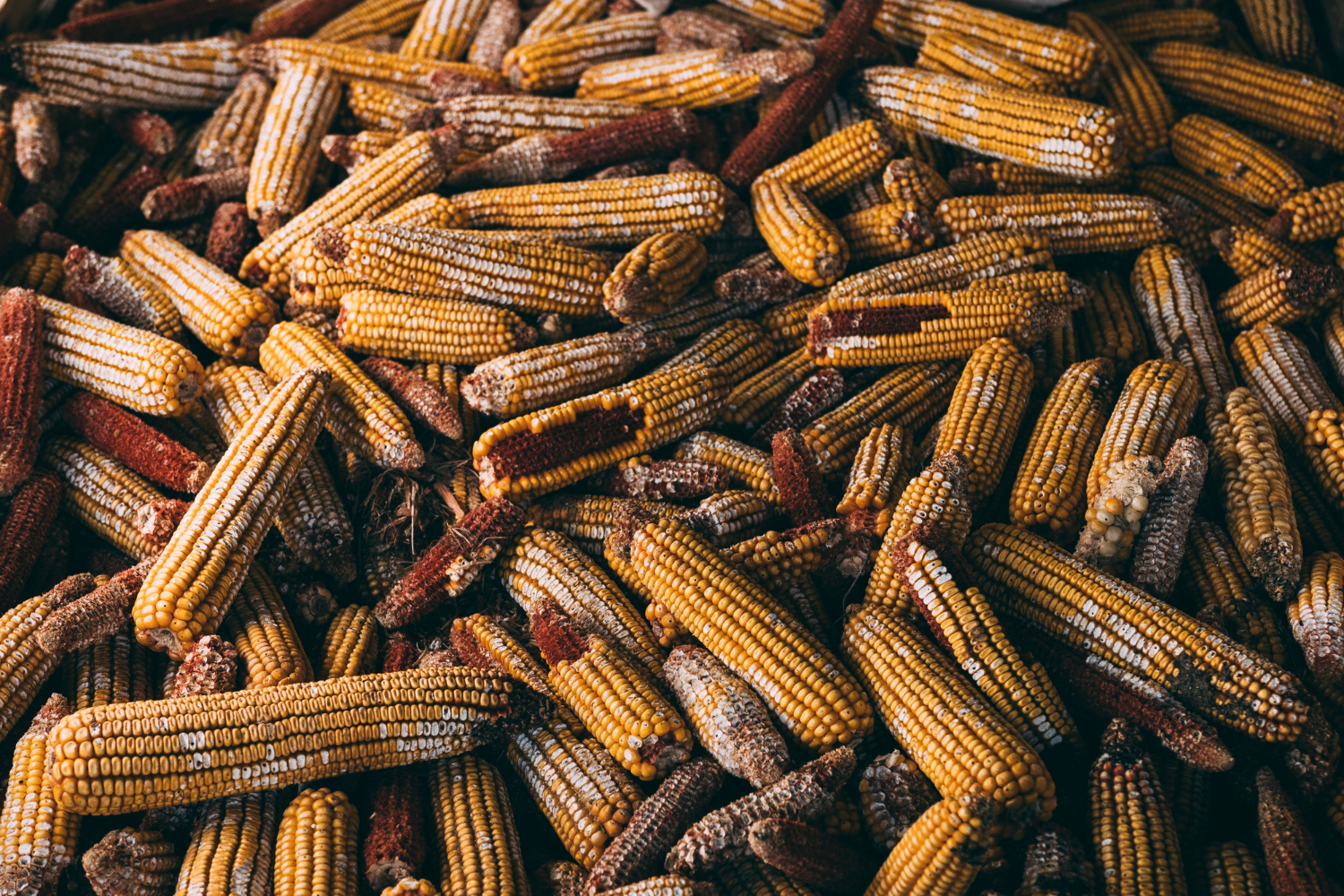
An industrial corn cob supplier serves a surprisingly wide range of buyers from metal finishing plants using ground corn cob as a soft abrasive media, to mushroom farms using it as cultivation substrate, to livestock operations using it as absorbent bedding. Bare corn cobs, the woody core left once kernels are removed, have quietly become a genuine multi-industry raw material rather than a simple agricultural leftover. This guide covers what corn cobs are actually used for, which countries lead global supply, what specifications matter when sourcing them, and how to evaluate a supplier for a recurring industrial order.
The Real Corn Cob Export Landscape: Who Actually Leads
It’s worth being accurate about where global corn cob supply actually concentrates, since export volume in this category is more specialized than headline “biomass market” statistics might suggest. Trade data compiled by Volza shows that India, China, and the United States are the top three global exporters of corn cobs, with India alone recording more than 1,675 export shipments in a recent tracked period, followed by China and the US. Indonesia’s own corn cob export activity is considerably smaller by comparison Volza’s data records just 43 corn cob export shipments from Indonesia over a recent twelve-month period, made by four Indonesian exporters to eight international buyers, with most volume heading to Saudi Arabia, the Philippines, and Malaysia.
This is a useful corrective to any assumption that Indonesia dominates corn cob export volume the way it does with coconut shell charcoal or palm-based biomass. Corn cobs are a genuinely niche, specialty export category for Indonesia one where growth (that 43-shipment volume represented roughly 5% growth over the prior period) is real but modest, and where the value proposition for buyers rests more on product quality and application fit than on Indonesia being the default, highest-volume origin.
What Bare Corn Cobs Are Actually Used For
Industrial Abrasive Media
Ground corn cob is a genuinely established soft abrasive used in vibratory and tumbling finishing processes across metalworking, automotive, and plastics manufacturing, where it cleans, dries, and polishes engineering parts by absorbing surface oils and residue without the harshness of synthetic abrasive media. Pricing for export-grade abrasive corn cob media in international B2B markets has been observed in the range of $320–400 per tonne for higher-grade material, reflecting its position as a specialty industrial input rather than a bulk commodity fuel.
Animal Bedding and Absorbent Applications
Corn cob’s natural absorbency and biodegradable structure make it a practical bedding and litter material for horses, pigs, and other livestock, offering a lower-dust alternative to some wood-based bedding products in certain applications.
Mushroom Cultivation Substrate
Corn cob has also found a steady niche as a growing medium in mushroom cultivation, where its fibrous structure and moisture-retention properties support fungal growth in commercial substrate blends.
Filler and Carrier Applications
Beyond these core uses, corn cob is used as a natural filler in packaging applications and, notably, as a carrier material for insecticides and fertilizers, where its absorbent structure helps distribute active ingredients evenly across a granular carrier base.
Specifications That Matter: Mesh Size, Hardness, and Moisture
Buyers sourcing corn cob for a specific industrial application need to specify particle size carefully, since supplier catalogs typically offer a range spanning coarse 4–6 mesh material down to fine 20–40 mesh grades, each suited to different blasting, polishing, or substrate applications. Beyond mesh size, corn cob’s natural physical properties matter for procurement decisions: it typically registers a Mohs hardness of around 4.5, positioning it as a genuinely soft abrasive suitable for delicate surface cleaning without gouging softer metals or plastics, alongside free-flowing, highly absorbent, and biodegradable characteristics that make it distinct from synthetic abrasive alternatives. Buyers should request documentation on moisture content specifically, since inconsistent drying is one of the more common quality issues affecting corn cob shelf life and usability across batches.
Where Corn Cobs Fit Into the Broader Biomass Trend
Corn cobs also sit within a larger renewable energy and biomass fuel conversation, even if they’re not currently a dominant Indonesian export volume category on their own. Indonesia’s broader biomass briquette market encompassing agricultural and forestry residues converted into densified fuel was estimated at roughly $156 million in 2025 and is projected to reach around $206 million by 2032, according to industry research from 6Wresearch, growing at a compound annual rate of about 4.1%. Corn cob residue is one of several agricultural feedstocks that can feed into this broader biomass fuel category, alongside rice husks and other crop residues, even though its more established commercial use case today remains industrial abrasive, bedding, and substrate applications rather than power generation fuel.
What to Look for in a Corn Cob Supplier
Given how application-specific corn cob sourcing decisions tend to be, buyers should prioritize suppliers who can confirm exact mesh size grading, moisture content specification, and consistent batch-to-batch quality since a supplier who can’t document these details clearly is a much bigger risk in a niche, specification-driven category like this than in a bulk commodity market where minor variance matters less. Buyers exploring this category can review our corn cobs product page for specification details relevant to abrasive, bedding, and filtration applications.
Frequently Asked Questions
- Is Indonesia a major global exporter of corn cobs? Not currently at large scale. India, China, and the United States lead global corn cob export volume, while Indonesia’s corn cob export activity is smaller and more specialized, primarily supplying buyers in Saudi Arabia, the Philippines, and Malaysia.
- What are bare corn cobs used for industrially? Ground corn cob is used as a soft abrasive media in metal and plastic finishing processes, as absorbent animal bedding, as a mushroom cultivation substrate, and as a filler or carrier material in packaging and agricultural inputs like insecticides and fertilizers.
- What mesh size should I request for corn cob abrasive media? This depends on the application — coarser 4–6 mesh grades suit heavier-duty cleaning, while finer grades down to 20–40 mesh are used for more delicate polishing and finishing work. Confirm the right grade with your equipment or process specifications before ordering.
- Is corn cob a hard or soft abrasive material? Corn cob is a soft abrasive, typically registering a Mohs hardness of around 4.5, making it suitable for cleaning and polishing delicate parts without gouging softer metals or plastics.
- Can corn cobs be used as a biomass fuel? Yes, corn cob residue can serve as a feedstock within the broader agricultural biomass fuel category, though its more established commercial applications today are industrial abrasive, bedding, and substrate use rather than large-scale power generation.
Ready to Source Corn Cobs for Your Industrial Application?
Whether you need abrasive-grade corn cob for metal finishing or absorbent material for bedding and substrate use, our team can walk you through mesh sizing, specification, and shipping options.
Explore Our Corn Cobs Product Page → Contact Our Export Team →