Facility managers upgrading to biomass heating almost always land on the same question early in the process: wood chips or wood pellets? Both are legitimate, widely used renewable fuels, but they behave differently in combustion, demand different storage infrastructure, and suit different boiler classes. Choosing the wrong one does not just affect fuel cost, it can affect equipment lifespan, maintenance frequency, and how consistently a facility hits its heat output targets.
This guide compares the two fuels across the specifications that actually determine boiler performance, so buyers can match fuel choice to equipment rather than the other way around.
What Are Wood Chips?
Wood chips are irregular wood fragments, generally 5 to 50 millimeters in size, produced by mechanically chipping logs, sawmill residues, or forestry waste with minimal additional processing. Because they are not compressed or dried beyond natural seasoning, chip quality and moisture content can vary meaningfully between batches and suppliers.
What Are Wood Pellets?
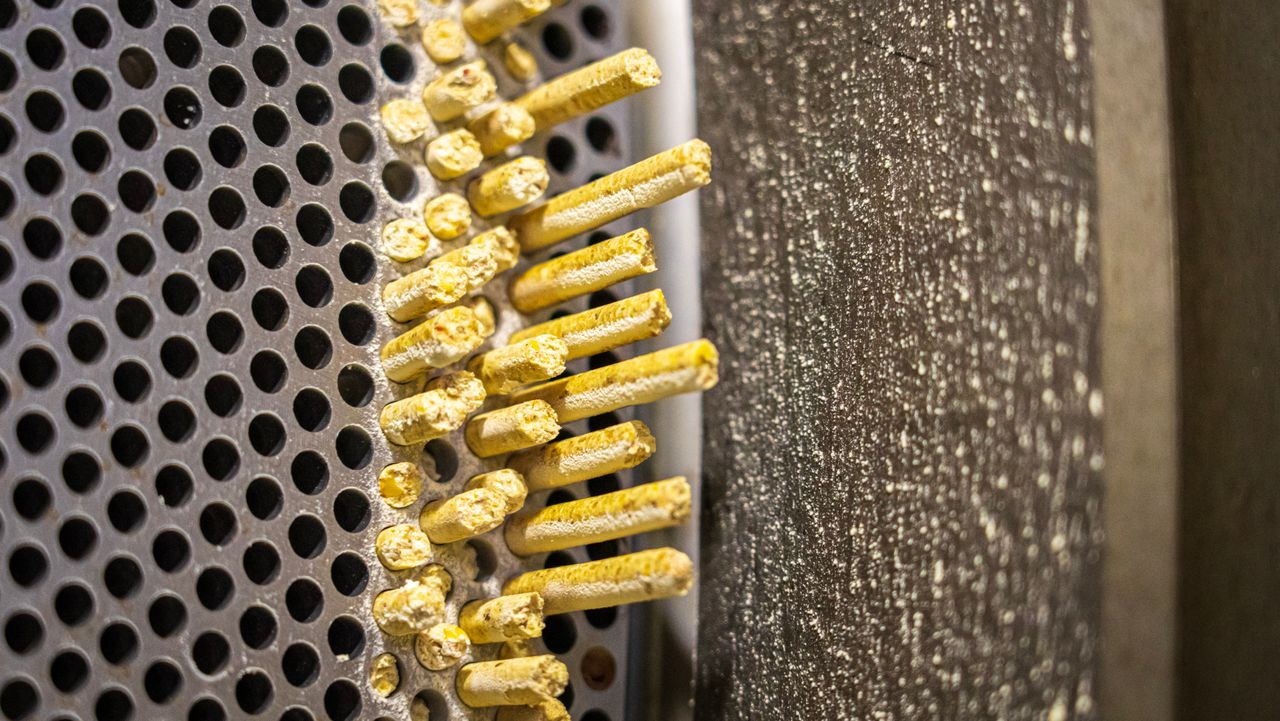
Wood pellets are produced by compressing dried, ground wood material, typically sawdust or wood shavings, through a die under high pressure, forming uniform cylindrical pellets usually 6 to 8 millimeters in diameter. This processing step removes moisture and standardizes particle size, which is the main reason pellets behave so differently from raw chips in combustion.
Technical Specifications Compared
Moisture Content
Moisture content is the single biggest driver of performance differences between the two fuels. Wood pellets typically hold moisture content below 10 percent, while wood chips commonly run in the 20 to 50 percent range depending on how recently they were cut and how they were stored. Lower moisture in pellets means more of each kilogram of fuel converts directly into usable heat rather than being lost evaporating residual water during combustion.
Calorific Value
Because of their low moisture, wood pellets generally deliver a higher calorific value per kilogram than wood chips, typically in the range of 4,300 to 5,000 kcal per kilogram compared to a lower, more variable figure for chips that depends heavily on moisture and wood species. A peer-reviewed comparison published in Energy & Fuels analyzed the chemical composition of wood chip and wood pellet samples across North America, confirming that calorific value, moisture, and ash content vary considerably between the two fuel forms and even between individual pellet manufacturers.
Ash Content and Combustion Cleanliness
Wood pellets typically produce less ash than wood chips, since pelletizing standardizes raw material and removes bark and contaminants that often remain in chipped wood. Cleaner combustion translates into less frequent ash removal and lower long-term maintenance costs for boiler operators running pellets.
Bulk Density and Storage Footprint
Wood pellets are considerably denser than wood chips, meaning a given storage volume holds significantly more usable fuel energy in pellet form. This is why pellets suit facilities with limited storage space, while wood chips generally require larger, more robust storage and handling infrastructure to hold an equivalent amount of heating capacity.
Which Fuel Fits Which Boiler?
Wood Chip Boilers
Wood chip boilers are generally designed for larger commercial and industrial applications, often starting around 100 kilowatts of output and scaling into district heating and large industrial systems. These boilers are built to tolerate variable moisture and particle size, but that flexibility comes with a tradeoff: chip boilers typically need more robust mechanical feed systems and more frequent maintenance to manage inconsistent fuel quality.
Wood Pellet Boilers
Pellet boilers are common across residential, commercial, and mid-scale industrial applications, largely because pellets’ uniform size and low moisture allow for automated feed systems that require minimal manual intervention. This automation, combined with cleaner combustion, makes pellets a strong fit for facilities prioritizing lower labor costs and consistent, hands-off operation.
Cost Considerations Beyond Price Per Ton
Upfront Fuel Cost
Wood chips typically cost less per ton than wood pellets, since they require less processing before reaching the buyer. On a pure price-per-ton basis, chips often look like the cheaper option.
Cost Per Unit of Heat Delivered
Because pellets carry more energy per kilogram due to lower moisture, buyers often need less pellet fuel by weight to hit the same heat output compared to chips. When comparing fuels, calculating cost per delivered heat unit, rather than cost per ton, gives a much more accurate picture of true operating expense.
Handling and Labor Costs
Pellet systems generally require less manual handling due to automated feeding, while chip systems often need more frequent operator attention and heavier equipment for loading and feed management. These labor differences should factor into any total cost comparison between the two fuels.
Making the Right Choice for Your Facility
Buyers running large-scale industrial or district heating systems, with the storage capacity and mechanical infrastructure to handle bulkier fuel, are often well served by wood chips, especially where fuel cost per ton is the primary budget driver. Buyers prioritizing automation, storage efficiency, and consistent combustion, particularly at small to mid-scale commercial facilities, generally get better long-term value from wood pellets, even at a higher upfront fuel price. Quality standards such as ISO 17225 for graded wood pellets give buyers a consistent framework for comparing supplier claims against verified specifications, regardless of which fuel type is ultimately selected.
Sourcing Wood Chips and Wood Pellets from Tropic World Paradise
PT Tropic World Paradise supplies both wood chips and wood pellets sourced from Indonesia’s forestry residues, with grade options suited to industrial boilers, district heating, and automated pellet systems. As part of a wider portfolio of biomass products, the company supports buyers across Asia, Europe, and the Middle East with verified specifications, competitive pricing, and full traceability from farm to port.
Frequently Asked Questions
Are wood pellets better than wood chips for boilers? Neither fuel is universally better; pellets suit automated, space-limited systems with consistent combustion needs, while chips suit larger industrial boilers designed for bulk, variable-moisture fuel.
Why do wood pellets have a higher calorific value than wood chips? Pellets are dried during processing, typically to below 10 percent moisture, so more of each kilogram converts to usable heat rather than evaporating residual water during combustion.
Can I use wood chips in a boiler designed for wood pellets? Generally no. Pellet boilers are engineered for uniform pellet size and automated feed systems, and feeding irregular wood chips can cause blockages or inconsistent combustion.
Which is cheaper, wood chips or wood pellets? Wood chips typically cost less per ton, but wood pellets often cost less per unit of heat delivered due to their higher calorific value and lower moisture content.
What should I check before choosing a wood chip or wood pellet supplier? Request documented moisture content, calorific value, ash content, and where applicable, certification against standards like ISO 17225, to confirm the fuel matches your boiler’s specifications.
Ready to Source the Right Biomass Fuel for Your Boiler?
Whether your facility runs on wood chips or wood pellets, Tropic World Paradise offers verified specifications and dependable global supply. Request a Quote or Contact Our Team to discuss your requirements today.